electronic prescription benefits – 10 Benefits of Electronic Prescriptions for Doctors and Patients
Introduction
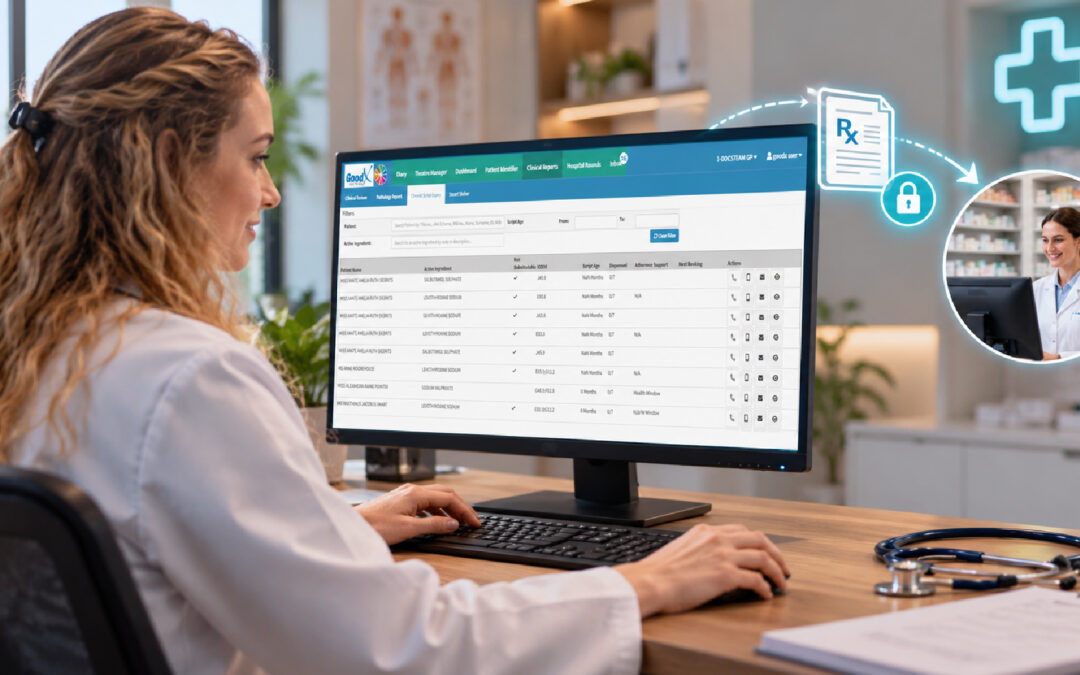
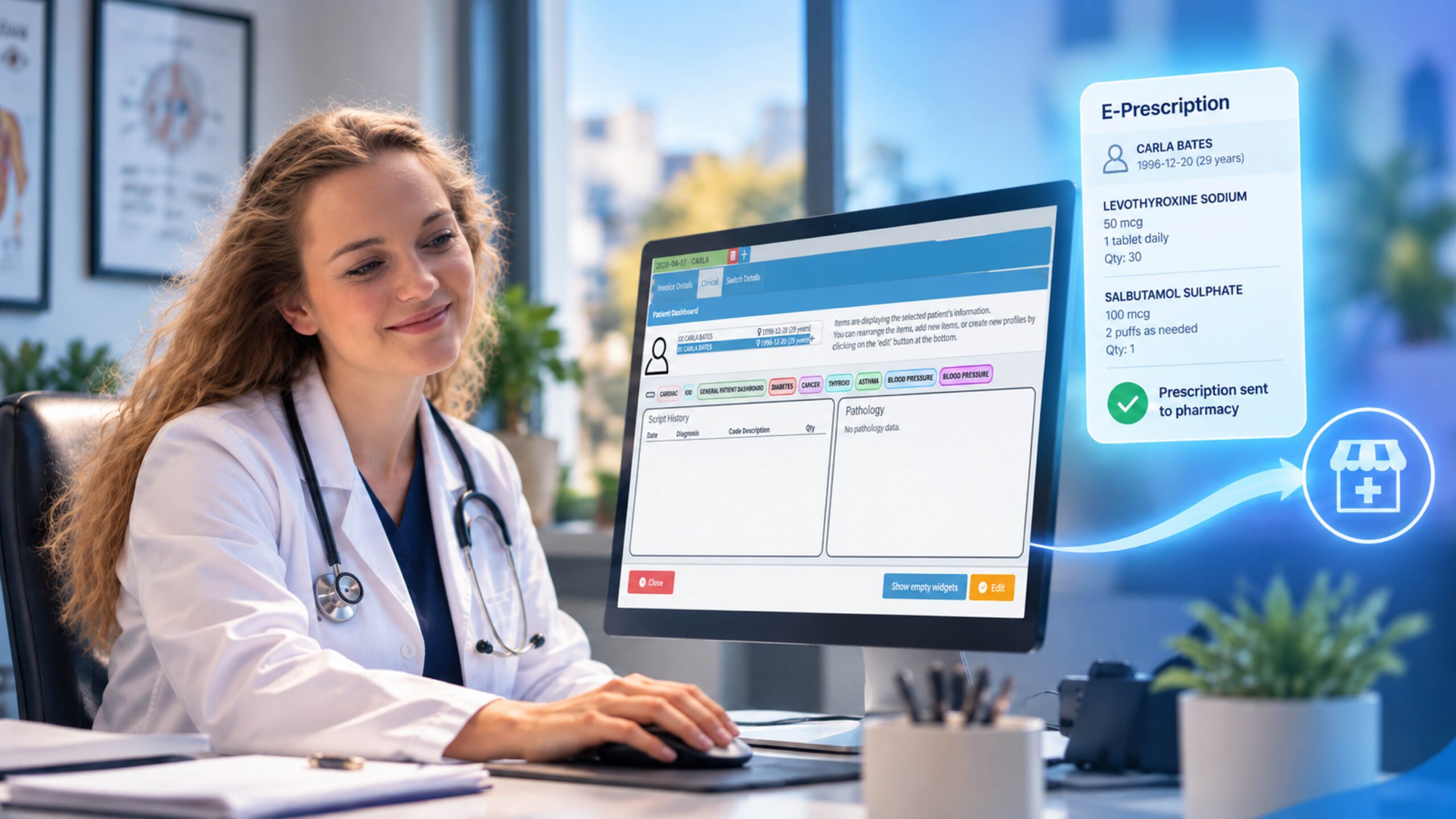
Electronic prescription benefits are changing the way doctors, patients and pharmacies manage prescriptions. Instead of relying entirely on handwritten or printed prescriptions, electronic prescribing allows prescription information to be created and transferred digitally through approved healthcare systems.
This can make the prescribing and dispensing process more efficient and convenient, while also reducing some of the risks and administrative work associated with paper prescriptions.
For patients, electronic prescriptions can make it easier to access and manage medicines. For doctors, they can simplify prescription workflows and reduce paperwork. For pharmacies, electronic prescription information can provide a more standardised way to receive and process prescriptions.
In this article, we’ll look at 10 benefits of electronic prescriptions for doctors and patients, as well as some of the considerations healthcare practices should keep in mind when adopting digital prescribing.
What Is an Electronic Prescription?
An electronic prescription, commonly known as an e-prescription, is a prescription that is created and transmitted digitally rather than relying solely on a physical paper document.
Depending on the country and healthcare system, a doctor or other authorised prescriber can create an electronic prescription within a compatible clinical system and send it to an authorised pharmacy or dispenser.
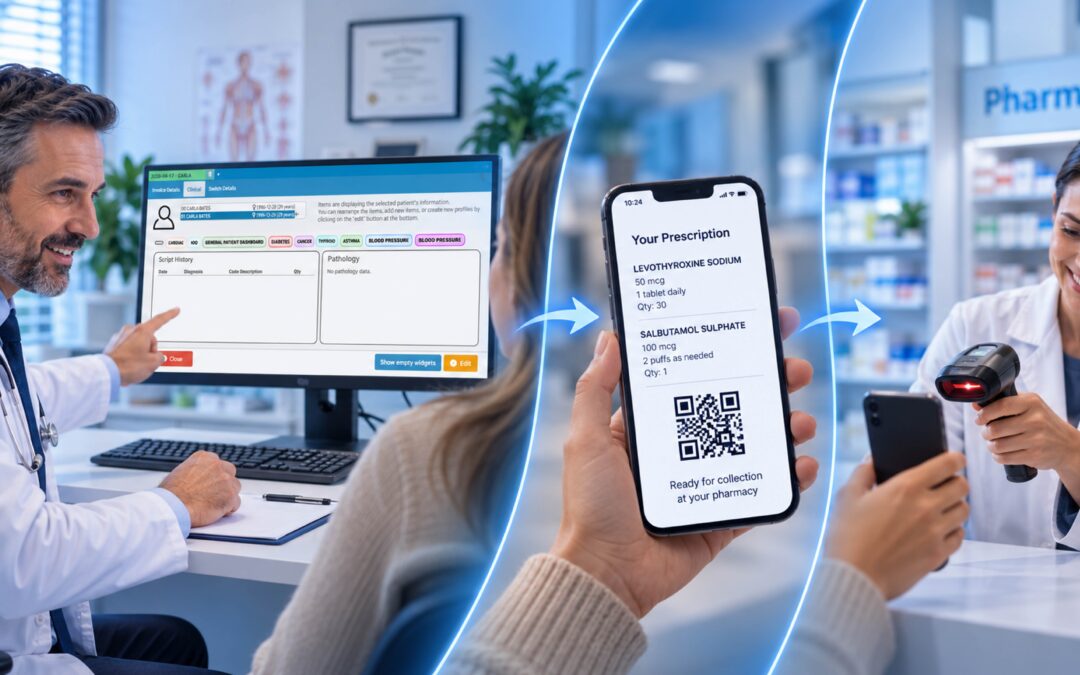
The patient may receive a digital token through SMS or email, use an approved healthcare application, or have the prescription associated with a digital prescription-management system.
The exact process varies internationally, but the basic idea remains the same: replace unnecessary paper-based prescription steps with a secure digital workflow.
It is important to remember that electronic prescribing does not replace clinical judgement. The healthcare professional is still responsible for assessing the patient and making the appropriate prescribing decision.
10 Electronic Prescription Benefits for Doctors and Patients
1. Fewer Prescription Errors
One of the most important electronic prescription benefits is the potential to reduce errors associated with handwritten prescriptions and manual transcription.
Handwritten prescriptions can sometimes be difficult to read or interpret. When information has to be manually transferred from one system or document to another, there can also be opportunities for transcription mistakes.
Electronic prescriptions use digitally entered information, creating a more standardised process for communicating prescription details.
This can help reduce problems associated with:
- Difficult-to-read handwriting
- Manual transcription
- Misinterpreted prescription information
- Incorrectly directed prescriptions
- Lost paper prescriptions
- Duplicate paperwork
Electronic prescribing does not eliminate every type of medication error. Doctors still need to make appropriate clinical decisions, and pharmacists still need to verify prescriptions before dispensing.
However, moving prescription information into a digital workflow can remove some of the risks associated with handwritten and paper-based processes.
2. Saves Doctors Time
Doctors and other healthcare professionals deal with a significant amount of administrative work every day.
Prescription management can contribute to that workload.
With electronic prescribing, prescriptions can be created and electronically signed within compatible clinical systems and then transmitted through the appropriate prescription service.
This can reduce the need to print, physically sort, sign, file or post prescriptions.
For healthcare practices, electronic prescribing may help reduce time spent on tasks such as:
- Preparing prescriptions for collection
- Printing prescription documents
- Posting prescriptions
- Sorting paperwork
- Managing some prescription-related queries
- Recreating lost paperwork
These might seem like small tasks individually, but across a busy medical practice, reducing repetitive administrative work can make a noticeable difference.
The objective isn’t simply to make prescribing faster. It’s to make the entire workflow more efficient.
3. Supports Telehealth
Telehealth has changed the way many patients access healthcare.
A patient can now have a consultation with a doctor through a video call or telephone appointment without necessarily visiting a medical practice.
But a remote consultation can create a practical challenge: how does the patient receive a prescription?
Electronic prescribing can help solve this problem where the relevant healthcare system supports it.
Following an appropriate telehealth consultation, a doctor may be able to issue an electronic prescription that is sent to the patient or an authorised pharmacy.
A simplified workflow could look like this:
Telehealth consultation → Electronic prescription → Pharmacy → Patient
This can help patients avoid travelling to a practice simply to collect a paper prescription.
It may be particularly useful for people who:
- Have difficulty travelling
- Live far from their healthcare provider
- Are receiving ongoing treatment
- Use telehealth regularly
- Need a prescription following a remote consultation
Electronic prescribing therefore helps connect remote consultations with the next stage of the patient’s care.
4. Greater Convenience for Patients
Convenience is another significant benefit of electronic prescriptions.
With a traditional paper-based process, a patient may need to collect a physical prescription from a doctor’s practice and then take it to a pharmacy.
Electronic prescribing can remove some of those physical steps.
Depending on the country and system being used, patients may receive an electronic prescription token through SMS or email, have the prescription sent to a nominated pharmacy, or manage prescriptions through an approved digital health application.
This can make prescription management easier for patients who:
- Use repeat prescriptions
- Take multiple medicines
- Have limited mobility
- Use telehealth services
- Live some distance from their doctor’s practice
- Find paper documents difficult to manage
The patient experience can become simpler because fewer steps depend on carrying or physically delivering paperwork.
5. Reduces the Risk of Lost Prescriptions
Paper prescriptions can be misplaced, damaged or forgotten.
When this happens, the patient may have to contact the medical practice and potentially request another prescription. That creates additional work for everyone involved.
Electronic prescribing reduces the reliance on a physical prescription document.
Depending on the system, prescription information can be securely stored and accessed through authorised channels. Some systems use electronic tokens, while others allow prescriptions to be managed through a centralised digital list.
This can reduce problems associated with:
- Lost prescriptions
- Damaged documents
- Forgotten paperwork
- Physical prescription storage
- Unnecessary reissuing
Digital systems can also include safeguards to prevent a prescription from being dispensed more than once.
For patients, this can mean fewer disruptions when trying to obtain their medicines.
6. Better Prescription Tracking
Another useful electronic prescription benefit is improved visibility into prescription status.
With paper prescriptions, it can sometimes be difficult for a doctor or patient to know what has happened after the prescription has been issued.
Electronic prescription services can provide tracking functionality that gives authorised users greater visibility of the prescription journey.
Depending on the system, healthcare professionals may be able to check whether a prescription has been received, its status or where it is in the process.
Patients may also be able to track prescription status through an approved digital health service.
This can help answer practical questions such as:
- Has the pharmacy received the prescription?
- Is the prescription ready?
- Has it already been dispensed?
- What is the current status?
Greater visibility can reduce unnecessary phone calls and improve communication between doctors, pharmacies and patients.
7. Reduces Administrative Work
Prescription management involves many tasks beyond writing the prescription.
Healthcare teams may need to print documents, organise prescriptions, prepare them for collection, respond to pharmacy queries, make corrections and manage cancellations.
Electronic prescribing can streamline several of these processes.
Standardised prescription information may reduce the number of clarification requests from pharmacies. Some electronic prescription systems also allow prescriptions or individual prescription items to be cancelled before dispensing.
If a replacement is required, it may be possible to transmit the replacement electronically rather than starting the paper process again.
For a busy practice, reducing these repetitive tasks can help create a smoother workflow.
Digital prescribing is most useful when it removes unnecessary steps rather than simply adding another piece of technology to the practice.
8. Reduces Paper Use
Electronic prescribing can also reduce reliance on paper.
Instead of printing a physical prescription for every transaction, prescription information can be transferred electronically to the appropriate dispenser.
This can reduce the need for:
- Printing
- Paper storage
- Physical filing
- Postal delivery
- Manual document handling
The environmental impact will depend on how electronic prescribing is implemented and how much paper is still required for other healthcare processes.
Nevertheless, reducing unnecessary paper-based administration can be a practical advantage for healthcare practices that are gradually moving toward digital workflows.
9. Makes Repeat Prescriptions Easier to Manage
Patients who take long-term medication can have several active prescriptions and repeat items to manage.
Keeping track of multiple prescription messages or tokens can become difficult, particularly when several medicines are involved.
Electronic prescribing can make repeat prescriptions easier to manage through features such as electronic repeat dispensing and consolidated prescription lists.
For example, an Active Script List can provide a consolidated list of a patient’s active electronic prescriptions in systems where this functionality is available.
Instead of having to search through multiple SMS or email messages, prescription information can be managed through a more centralised process.
This can be particularly useful for patients taking several medicines or regularly receiving repeat prescriptions.
For healthcare professionals and pharmacies, more organised digital prescription management can also support a more consistent workflow.
10. Connects Doctors, Patients and Pharmacies
Perhaps the most significant long-term advantage of electronic prescribing is that it can connect different parts of the prescription process.
A paper-based prescription may require several physical steps between the doctor, patient and pharmacy.
Electronic prescribing can bring those steps into a connected digital workflow.
A simplified process looks like this:
Doctor
The prescriber assesses the patient and creates the appropriate prescription using a compatible clinical system.
↓
Electronic Prescription System
The prescription information is securely transmitted or made available to the authorised dispenser.
↓
Pharmacy
The pharmacy retrieves and verifies the prescription before dispensing the medicine.
↓
Patient
The patient receives or collects the prescribed medicine.
This connected approach can reduce paperwork, improve visibility and make communication between different parts of the healthcare system more efficient.
Are Electronic Prescriptions Safe?
Security is an important consideration whenever healthcare information is managed digitally.
Prescription information can contain sensitive patient and medication data, so electronic prescribing systems require appropriate safeguards.
Depending on the country and technology being used, these safeguards may include:
- User authentication
- Digital signatures
- Encryption
- Access controls
- Identity verification
- Authorisation requirements
- Prescription tracking
- Controls against duplicate dispensing
Some systems also ensure that once a prescription has been accessed and dispensed, it cannot simply be reused at another pharmacy.
The exact security requirements differ between countries and healthcare systems.
Healthcare providers should therefore ensure that the electronic prescribing technology they use complies with the relevant legislation, technical standards and professional requirements in their jurisdiction.
What Are the Challenges of Electronic Prescribing?
Although electronic prescribing offers many benefits, implementing it successfully requires more than simply installing software.
Technology Compatibility
Doctors, pharmacies and other healthcare organisations need compatible systems to exchange prescription information.
If systems cannot communicate effectively, electronic prescribing can become more complicated rather than less.
Staff Training
Healthcare professionals need to understand how electronic prescriptions are created, signed, cancelled, transmitted and managed.
Proper training helps ensure that technology supports the workflow rather than creating additional confusion.
Privacy and Cybersecurity
Digital prescription systems manage sensitive healthcare information.
Strong security measures and appropriate access controls are therefore essential.
Regulatory Requirements
Prescription regulations vary between countries and jurisdictions.
The rules can be particularly important when prescribing controlled or restricted medicines.
Healthcare providers should understand the requirements that apply to their location before introducing or expanding electronic prescribing.
Digital Accessibility
Not every patient has the same access to smartphones, email, internet connectivity or digital health applications.
Healthcare providers should consider accessibility and ensure that patients who cannot use a digital method are not unnecessarily disadvantaged.
How GoodX Supports Modern Practice Workflows
Electronic prescribing is only one part of a medical practice’s wider digital workflow.
For it to work well, the technology needs to fit naturally into the way healthcare professionals already manage patients, consultations and administration.
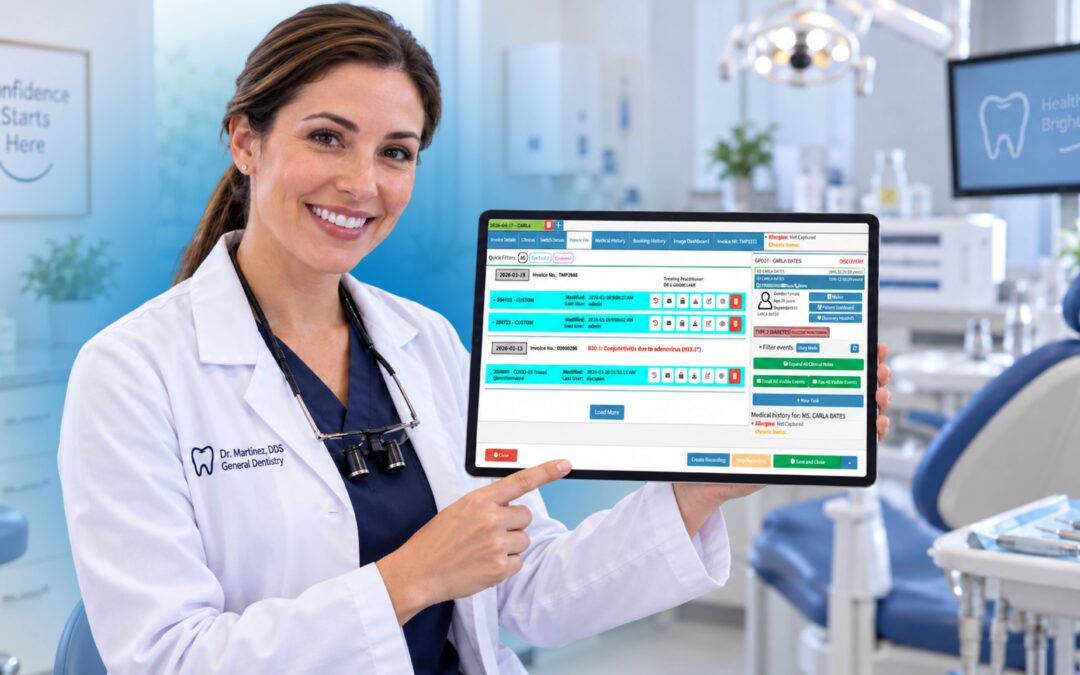
This is where practice management software such as GoodX can fit into the broader picture.
GoodX provides healthcare software that supports medical practices with many of their everyday administrative and practice-management needs.
The important point is that electronic prescribing shouldn’t exist in isolation.
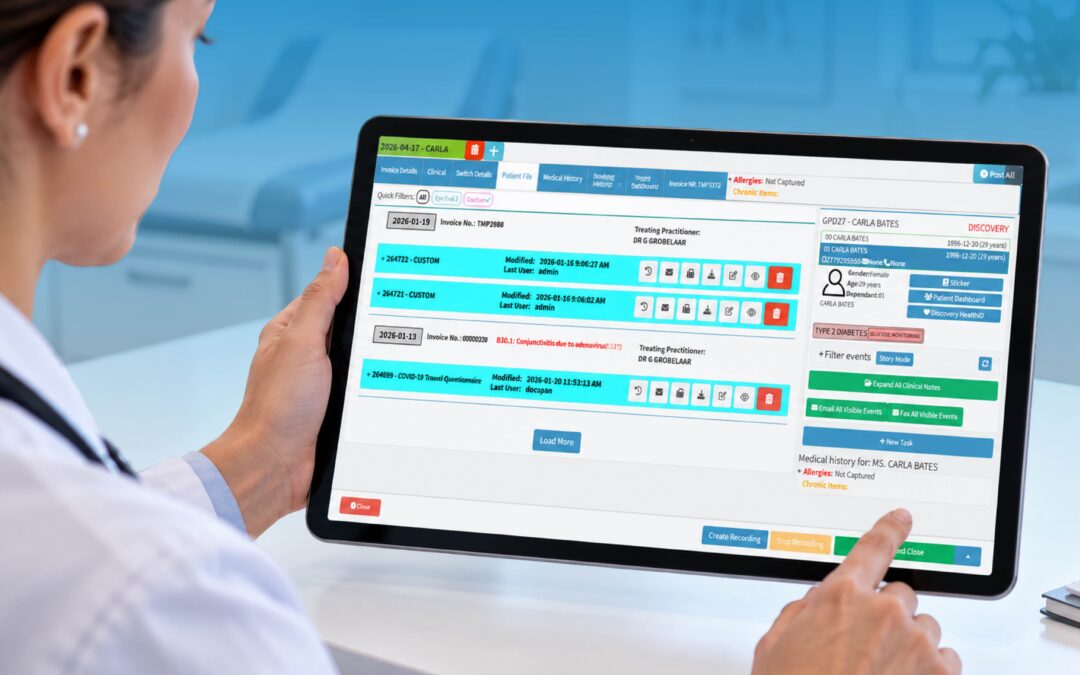
A doctor may need to manage patient information, consultations, billing, accounts, prescriptions and other administrative tasks as part of the same working day.
When these processes are supported by appropriate digital systems, practices can reduce unnecessary duplication and make everyday workflows more connected.
For example, a streamlined digital practice may involve:
- Accessing the patient’s information.
- Conducting the consultation.
- Making the appropriate clinical decision.
- Creating or managing the prescription using available electronic prescribing functionality.
- Completing the required administrative processes.
- Continuing with the patient’s care without unnecessary paper-based steps.
The exact electronic prescribing functionality available to a practice will depend on its country, regulations, software configuration and any relevant integrations.
So GoodX isn’t the prescription service itself. Rather, GoodX sits within the wider digital practice environment where efficient patient and practice management can support modern healthcare workflows.
For medical practices considering electronic prescribing, the important question isn’t only whether a prescription can be sent electronically.
It is also whether the technology fits smoothly into the way the practice already operates.
Why Electronic Prescription Benefits Matter to Modern Healthcare
The move away from paper prescriptions is part of a much broader change in healthcare.
Electronic health records, telehealth, digital patient communication, practice management systems and connected pharmacy services are all contributing to a more digital healthcare environment.
Electronic prescribing sits within that ecosystem.
For doctors, the benefits can include:
- Less paperwork
- More efficient prescription workflows
- Better prescription visibility
- Reduced administrative tasks
For patients, the benefits can include:
- Greater convenience
- Easier prescription management
- Reduced reliance on paper
- Better access following telehealth consultations
For pharmacies, electronic prescriptions can provide more standardised prescription information and reduce some of the difficulties associated with handwritten documents.
The value becomes even greater when these digital systems can work together.
The Future of Electronic Prescribing
Electronic prescribing is more than simply replacing a handwritten prescription with a digital version.
It represents a shift toward a healthcare environment where prescription information can move securely between authorised healthcare professionals, pharmacies and patients.
As digital healthcare continues to evolve, electronic prescribing may become increasingly connected with electronic health records, telehealth platforms, patient applications and medication-management tools.
The priority should remain the same: make prescribing safer, more efficient, accessible and convenient without losing the human element of healthcare.
Technology should support healthcare professionals, not make their jobs harder.
And for patients, the best digital healthcare experience is often the one that quietly removes unnecessary steps without making the technology itself the centre of attention.
Key Takeaways
The 10 electronic prescription benefits explored in this article demonstrate why digital prescribing has become an increasingly important part of modern healthcare.
Electronic prescriptions can help reduce some prescription-related errors, save doctors time, support telehealth, improve patient convenience, reduce the risks associated with lost paperwork and provide greater visibility throughout the prescription process.
They can also make repeat prescriptions easier to manage, reduce paper-based administration and create a more connected workflow between doctors, pharmacies and patients.
However, electronic prescribing is not a complete solution to every medication-management challenge.
Its success depends on secure technology, compatible systems, appropriate training, accessibility and compliance with local regulations.
For medical practices, the goal should not simply be to digitise an existing paper process.
The bigger opportunity is to create a healthcare workflow where digital tools work together naturally — allowing doctors and staff to spend less time dealing with unnecessary administration and more time focusing on patients.
As healthcare continues to evolve, electronic prescribing will remain an important part of that transition.
The future of prescribing isn’t simply paperless. It’s about creating a safer, simpler and more connected experience for everyone involved.
Contact our team to book your free GoodX demo.
Disclaimer: This article is provided for general informational and educational purposes only. While GoodX Software takes reasonable care to ensure that the information is accurate and current at the time of publication, laws, regulations, industry standards, healthcare policies and technology may change. The content should not be regarded as medical, legal, financial or other professional advice. Readers should verify information relevant to their circumstances and consult an appropriately qualified professional where necessary. GoodX Software accepts no responsibility for decisions made or actions taken solely on the basis of this content.